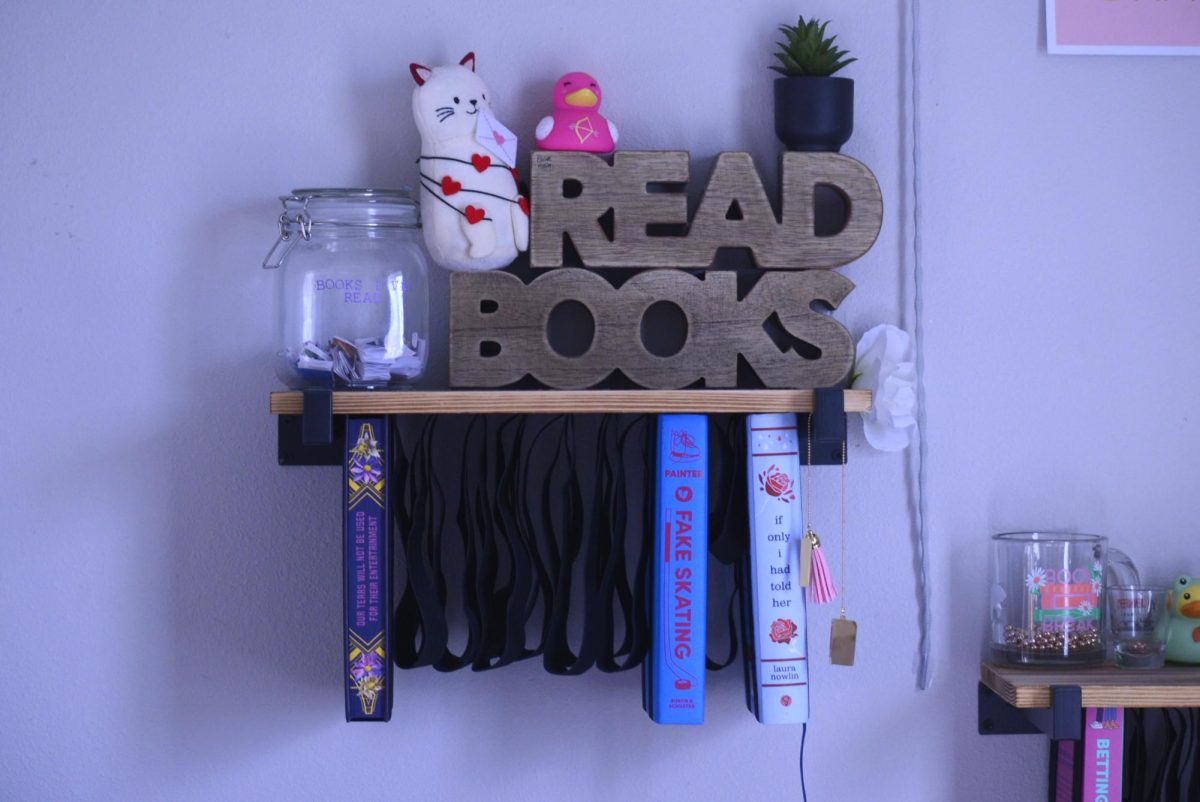
As a kid, not a lot of people have access to screens. Sure, during the day, they can watch TV with their parents, or they might get some time on an IPad or phone with their parent’s permission.
But what about at night? When the lights go out, the house goes quiet, and the family falls asleep, what does the night owl do?
For some of the kids at Lakeland High School, night time turned in to reading time. They would pick up a book, turn on the flashlight, and get lost in the world that came from the words on the page.
A lot of kids hate reading; in fact, for some, the only reading out of a book they’ll do is for school. But for others, reading is a way to escape reality. It’s a way to forget the real world without the consequence of a shorter attention span.
For junior Kylea Bartam, that became a habit when she was just a kid. She tries to read at least a little bit every week, and she said this year, so far, she is averaging about 4 books a month.
Junior Jenna Olson picked it up in middle school. She reads almost every night before bed as a way to wind down and get ready to go to sleep.
Junior Stormy Lawson started when she knew what a book was. She reads every day at home, spending her free hours getting lost in another world.
Junior Soli Landin got into it when she was in elementary school, though she started expanding her genres when she was a freshman in high school. She doesn’t read as much as she’d like, but when she does manage to find time, she’ll spend hours and hours getting lost between the pages of whatever book she happens to be reading.
All four of these girls started getting in to reading for different reasons. Bartram’s mom used to read to her, sparking a love.
“I liked how good I was at it and I liked the escape it gave me,” Bartram said.
Olson found out she liked escaping to a different world. Lawson was just too short to see the TV. Landin was given a book that she ended up loving, starting a spiral.
“When I was about nine my grandparents gave me a beautifully illustrated copy of Winnie the Pooh, and I read that all the time,” Landin said.
But as these kids have grown up and started buying their own things, it becomes obvious just how much this hobby actually costs.
Just 20 years ago, in 2006, the dollar range for a standard paperback book was 6 to 8 dollars. In 2026, that range is anywhere from 15 to 20 dollars. Keep in mind, this is just the standard size; a hardcover can cost anywhere from 20 to 35 dollars. Special and collector’s editions are even more expensive, with special editions getting up to 50 dollars and collector’s up past $150.
A lot of people will still choose to spend the money on the ‘pretty’ books despite the extra cost, but not very often. Most will opt for the cheapest option, maybe a hardcover if they have a little bit of spending money.
For high schoolers who have reading as a hobby, that fun thing they grew up loving has turned in to something that takes their money.
Bartram said she’s spent at least $500 on books, though other people have spent a lot more on gifting her books. She likes being able to buy her own books so they can sit on her shelf, but she also uses her mom’s kindle account and her sister’s audible account.
Olson said she’s likely spent around $300 on books, and she likes having the physical copy, which is more expensive than an audio or online book.
Lawson gave a range of 100 to 500 dollars spent on books, but she does buy her books second-hand, which is a cheaper option.
“I especially love when there are notes in the book, because then I can see into the mind of the previous reader,” Lawson said.
She prefers physical books, though she doesn’t mind an audiobook either. She will buy some she likes, but holidays are a time where she’ll just ask people to buy them for her.
Landin also prefers physical books, mainly because she think audiobook narrators suck. People buy a lot of books for her, but personally, she has spent around $200. She likes the look of the fancy books, but they’re a little too out of her budget.
“I love Barnes & Nobles’ beautifully designed covers but they tend to cost more than I would like to spend,” Landin said.
All four of these girls said they’d likely own and read a lot more books if the price was similar to how it was in 2006. The cost will stop them from buying something they really want, especially with inflation and how expensive it’s becoming to do something they love.
“I would probably still spend the same amount of money and then have double the books,” Bartram said.
She reads in most of her free time, so having even more options would be paradise for her.
“I’d have my own library,” Lawson said.
All four of these girls have grown up loving reading, starting from different points in their lives. As the cost of reading rises and books become more and more expensive, some of them may find it harder to pick up a book, knowing that when they put it down, it could be a long time before they are able to pick up another.