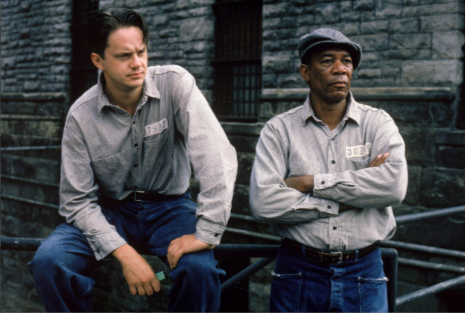
The Shawshank Redemption is often ranked as one of the greatest films ever made, praised for the emotional depth, powerful performances, and enduring message of hope.
On the surface, it tells the story of men trapped inside a brutal prison system. An experience most viewers will never personally face. Yet despite this distance, the film remains deeply relatable.
Its power comes from balancing two opposing truths, while the setting and character are far removed from everyday life. The emotions and struggles at the heart of the story are universal.
For most people, prison life is completely unrelatable. The audience is unlikely to know what it feels like to be locked behind bars for decades, to face corrupt guards, or to swim through the rigid social life of inmates.
Andy Dufresne’s wrongful conviction, in particular, feels extreme and unfair in a way that most viewers will never experience firsthand.
Shawshank Prison represents a closed world controlled by violence, fear, and power. This environment creates a sense of separation between the audience and the characters, reminding viewers that this is a story about a very specific and harsh reality.
However, this unrelatable setting is exactly what allows the film’s deeper themes to stand out. Beneath the prison walls, The Shawshank Redemption is not really about incarceration, it’s about endurance, identity, and the human need for hope.
These themes are what make the movie so relatable. Andy’s struggle is not just about escaping prison, but about keeping his sense of self in a system designed to strip him of it.
Many people can relate to feeling trapped in situations they did not choose, such as dead-end jobs, unhealthy relationships, or societal expectations. While these situations are not as severe as prison, the emotional experience of feeling powerless or confined is similar.
Red’s character further strengthens this connection. His long-term imprisonment leads to “institutionalization”, where a person becomes too reliant on the prison system, and freedom itself becomes frightening. Red’s fear of life outside Shawshank reflects a common human experience…
The fear of change…
Even outside of prison, people often grow comfortable with routines that limit them because those routines feel safe. Red’s hesitation mirrors the fear many feel when faced with starting over, whether after graduation, job loss, or personal failure.
His struggle feels deeply human, even if his situation is not.
The film also connects through its portrayal of time. Shawshank shows how years can slip away quietly, marked by small routines and fading dreams.
This passage of time is painfully relatable. Many viewers recognize the feeling of looking back and wondering where the years went or realizing that life has slowly become something different than what was once imagined.
Brooks’ tragic story highlights this theme most clearly. His failure to adjust to the outside world is heartbreaking, not because he was in prison, but because he lost his sense of purpose.
His loneliness and confusion echo fears many people have about aging, irrelevance, and being left behind.
At the same time, the film remains unrelatable in its optimism. Andy’s patience, intelligence, and long-term planning are almost unrealistically admirable. His ability to maintain hope for nearly twenty years, while secretly carving his escape, borders on mythic.
Most people do not possess that level of foresight or emotional control. Andy becomes less of an average person and more of a symbol. hope in the living flesh. While inspiring, this can also distance the audience, reminding them that Andy is exceptional in ways most people are not.
Yet even this exaggeration serves a purpose. Andy’s unrelatable position challenges viewers to reflect on their own limits.
The film does not suggest that everyone can escape their problems as dramatically as Andy does, but it encourages the idea that hope itself is an act of rebellion.
In that sense, Andy’s character functions as an ideal rather than a mirror. He represents what people wish they could be when faced with despair.
Ultimately, The Shawshank Redemption succeeds because it understands that relatability does not require identical experiences.
The film’s prison setting may be distant, but its emotional truths are close to home. It reminds viewers that freedom is not only physical, that time is precious, and that hope can survive even in the worst conditions.
By blending the unrelatable extremes of prison life with deeply relatable human emotions, the movie achieves its lasting impact. It speaks to who we are, even when it shows us a world we have never known.