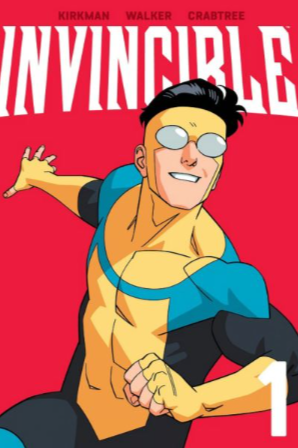
Amazon’s animated series Invincible stands out in a genre that often feels crowded with familiar ideas and predictable outcomes.
While most superhero stories focus on spectacle, clear moral lines, and neat resolutions, Invincible takes a different approach. It presents a world where superpowers do not erase emotional struggle, personal failure, or the lasting consequences of violence.
In doing so, the show offers a surprisingly realistic view of what it might actually mean to grow up as a superhero.
At its core, Invincible is a coming-of-age story. Mark Grayson begins the series as a fairly ordinary teenager, aside from the fact that his father is the most powerful hero on Earth.
When Mark finally develops his own powers, the show initially follows a familiar path: training sessions, awkward hero names, and the excitement of finally being “special.”
However, this sense of wonder fades quickly.
Unlike many superhero stories, Invincible does not pretend that gaining powers instantly brings maturity or wisdom.
Mark is still emotionally unprepared, naïve, teenager; and prone to making serious mistakes.
One of the show’s most realistic qualities is how it treats violence.
In many superhero franchises, destruction is treated as background noise. Cities are leveled, civilians are endangered, and heroes walk away largely unchanged. Invincible refuses to do this.
Violence is graphic, uncomfortable, and often tragic. Characters are injured, killed, and permanently changed. More importantly, the emotional aftermath is never ignored.
Mark carries guilt, fear, and trauma from his experiences, and the audience is forced to confront the cost of heroism rather than just its glory.
This realism extends to the show’s portrayal of responsibility. Mark wants to help people, but good intentions are not enough.
He often arrives too late, underestimates threats, or makes decisions that worsen situations. Instead of being praised simply for trying, he is held accountable for failure.
This reflects real life far more than traditional superhero narratives, where effort alone is often treated as heroism. Invincible suggests that growth comes not from power, but from learning through painful experience.
Perhaps the most striking example of this realism is Nolan Grayson, also known as Omni-Man. At first, he appears to be the ideal superhero: powerful, confident, and respected. As the story unfolds, this image collapses.
Nolan represents a darker truth about authority and legacy. His worldview is shaped by his origins, not by Earth’s moral values, and his relationship with Mark becomes a central conflict.
The show uses this dynamic to explore how parents shape their children, sometimes in harmful ways, even when they believe they are doing what is right.
Mark’s personal growth is deeply tied to this relationship. He must confront the idea that someone he loves and admires is capable of immense cruelty. This realization forces Mark to define his own moral compass instead of inheriting one.
In many superhero stories, the hero’s values are fixed from the beginning. In Invincible, values are questioned, tested, and earned.
Mark becomes a hero not because of his powers, but because he actively chooses empathy over dominance.
The show also excels in portraying relationships as complex and fragile.
Mark’s friendships suffer as he struggles to balance his double life. His romantic relationship is strained by dishonesty and absence.
His mother, Debbie, is forced to reevaluate her entire life as truths about her husband emerge. These conflicts between characters ground the series in reality.
Superpowers do not protect characters from emotional pain, and love does not survive without trust.
What makes Invincible especially effective is that it does not glorify suffering, but it does not avoid it either. Growth is shown as slow, uncomfortable, and often unfair. Characters do not always receive closure, and victories are frequently incomplete.
This mirrors real personal development more accurately than the clean arcs seen in many superhero shows. People grow by being challenged, by being hurt, and by choosing to continue despite those experiences.
In the end, Invincible succeeds because it treats superheroes as people first. It strips away the fantasy that power solves conflict and replaces it with a more honest message: strength without maturity is dangerous, and growth requires acceptance.
By combining brutal realism with emotional depth, the series redefines what a superhero story can be.
It reminds viewers that becoming better is not about being invincible, but about being willing to learn, change, and care in a world that often makes those choices difficult.